The seven pages every service business website should have — and why each one earns its place
Your homepage is the front door. It tells people in the first few seconds what you do, where you do it, and whether you look like someone worth calling. It is not a welcome page. It is a sales page.
Individual service pages are where most trade websites fall short. One page called "Our Services" with a list of bullet points is not enough. Each service you offer needs its own page. A plumber who offers boiler installation, bathroom fitting, and emergency callouts should have a separate page for each. This matters for Google as much as it matters for your visitor.
Location pages tell Google where you work. If you cover five towns, you need a page for each one. A roofer based in Banbury who also covers Bicester, Brackley, and Daventry will not show up in searches from those towns without location-specific pages. This is one of the most overlooked parts of a website for tradesmen.
An About page builds trust. People hire people, not companies. A short, honest page about who you are, how long you have been trading, and what you stand for does more than most business owners expect. It is often the second page a visitor reads after the homepage.
A testimonials or reviews page gives people the social proof they need to act. Most people check reviews before they book anyone. Putting your best reviews on their own page, rather than burying them in a footer, gives them the weight they deserve.
A blog or resources section is optional at the start, but valuable over time. Answering the questions your customers ask most often, in plain English, builds trust and helps Google understand what you know. A heating engineer who writes a clear post about when to replace versus repair a boiler is more useful, and more findable, than one who does not.
A contact page sounds obvious. But a contact page that just shows an email address is not doing its job. More on that below.
What to put on each page to make it work, not just fill space
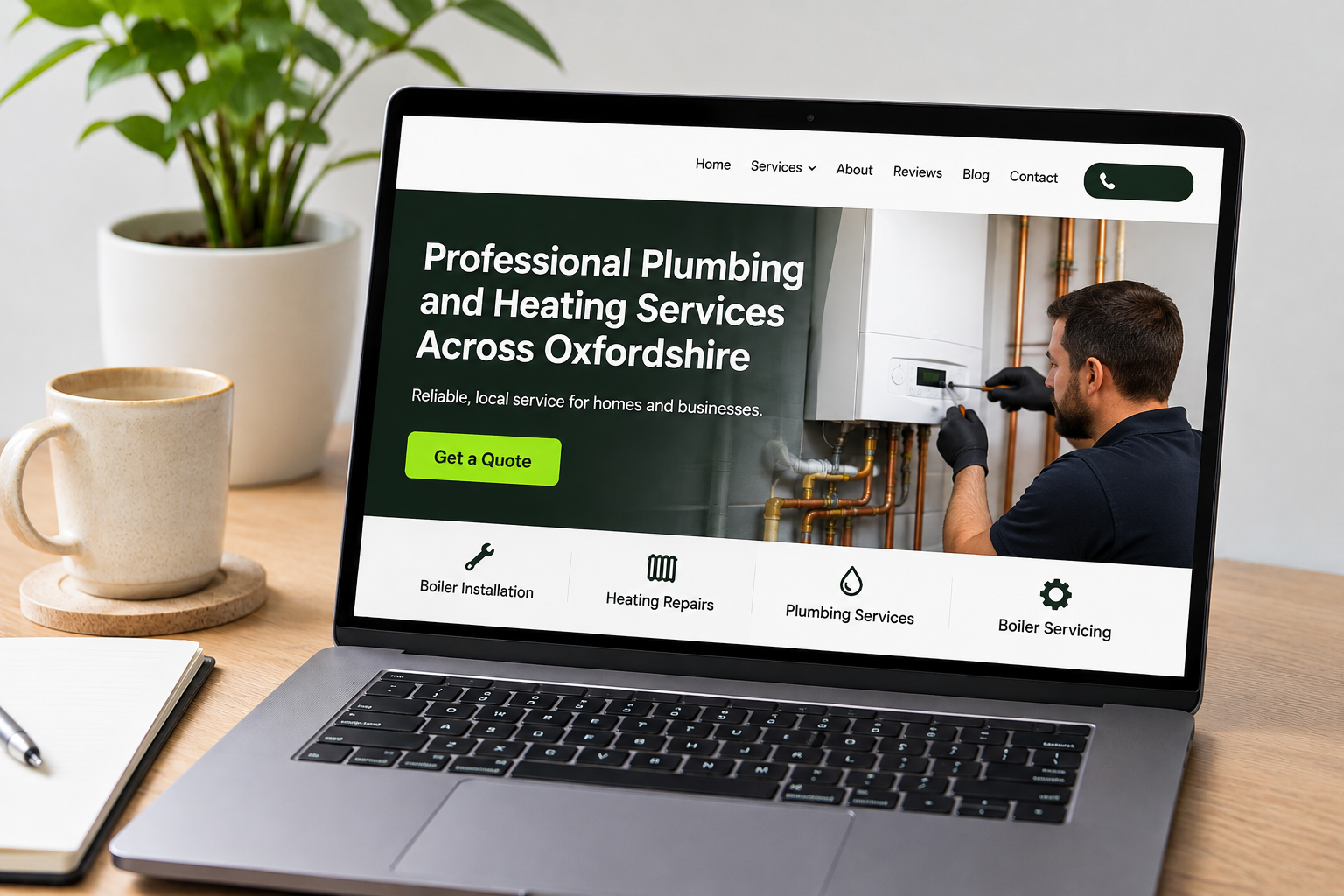
Homepage. Lead with what you do and where you do it. "Boiler installation and central heating repairs across Oxfordshire" tells a visitor more in five words than a paragraph of vague promises. Add a clear call to action above the fold. Show your best review or your star rating. Include a photo of you or your team, not a stock image. Finish with a summary of your services and a second call to action lower down the page.
Service pages. Each page should be about one service only. Start by describing the problem the customer has, then explain how you solve it. Include the specific work involved, how long it typically takes, and what happens next when they enquire. Add a relevant photo if you have one. Finish with a call to action. A good service page reads like a conversation, not a brochure.
Location pages. These need to be genuinely useful, not just the same text with the town name swapped in. Mention the areas within that town you cover. Reference local landmarks or postcodes if it helps. Explain what kinds of jobs you typically do in that area. The goal is a page that would be useful to someone actually searching from that location.
About page. Tell your story briefly and honestly. How long have you been in business? What qualifications or accreditations do you hold? Why do you do this work? You do not need to write an autobiography. Three or four short paragraphs, a photo, and your key credentials is enough. This page is where someone decides whether to trust you.
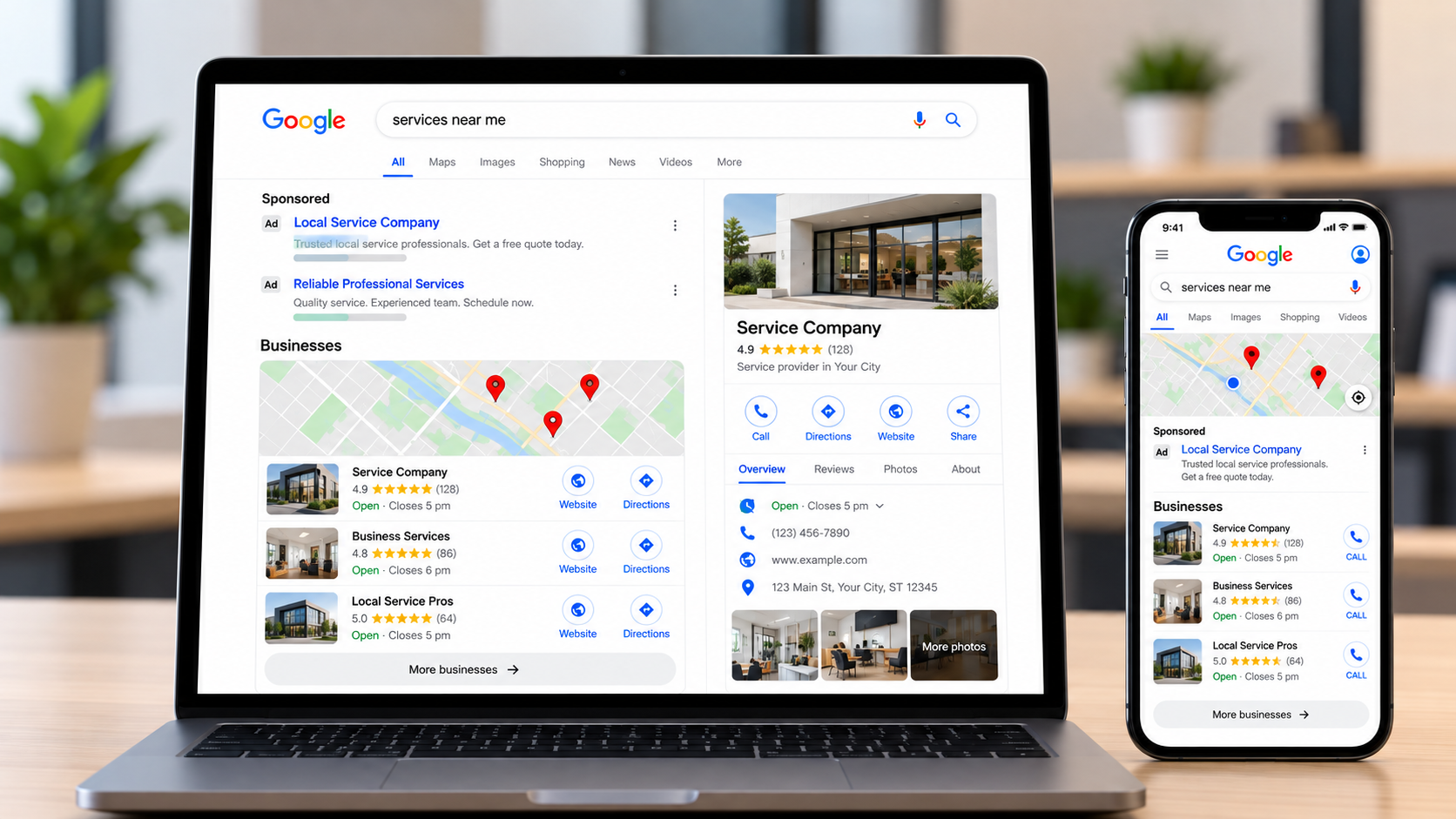
Testimonials page. Do not just paste in a wall of five-star ratings. Pick your best ten to fifteen reviews and present them clearly. Include the customer's first name and town if they are happy for you to do so. If you have Google reviews, link to your profile. If you have trade body accreditations or scheme memberships, show them here too.
Blog or resources. Write about the questions you get asked most. "How much does a new boiler cost in 2025?", "What is the difference between a combi and a system boiler?", "Do I need planning permission for a loft conversion in Oxfordshire?" Specific questions get specific visitors. Keep posts short, plain, and useful.
Contact page. Include your phone number, prominently. Add an enquiry form, but keep it short. Name, phone number, and a brief description of the job is enough. If you have a service area map, include it. State your typical response time. A contact page that removes friction gets more enquiries than one that makes people work.
Which pages to prioritise if you are starting from scratch or working with a tight budget
You do not need all seven pages live on day one. But you do need the right ones in the right order.
Start with your homepage. Get this right before anything else. It is the page most visitors will see first, and it sets the tone for everything else.
Then build your service pages. One page per service. If you offer three services, you need three pages. This is where your website starts to do real sales work, and it is where Google starts to understand what you actually do.
Add your contact page next. Without a working contact page, the rest of the site cannot convert. Keep it simple and make sure it works on mobile.
Then your About page. This is the page that turns interest into trust. Do not leave it as a placeholder for long.
Location pages come next. If you work across multiple towns or postcodes, these pages are how you get found in each of them. A website for tradesmen that only mentions the business's home town is invisible to everyone searching from ten miles away.
Testimonials and a blog can follow. They add weight and credibility over time, but they are not day-one priorities.
One thing worth knowing: the businesses we work with at Winston Web Co, and we have worked with over 127 service businesses across the UK, consistently find that adding individual service pages and location pages has the biggest impact on enquiries. Not a redesign. Not a new logo. The right pages, with the right content.
If you are unsure whether your current website has what it needs, a quick review of these seven pages is a good place to start. Look at each one and ask: does this page give a visitor a reason to call me? If the answer is no, that page is not doing its job.
Our
website design and build services are built around exactly this structure, because it works for trades and local service businesses. Every page has a purpose, and every page earns its place.
If you want a straightforward conversation about what your website needs,
get in touch and we will tell you honestly what is working and what is not.